

BY OLAPEJU OLUBI
With climate threats becoming too glaring to ignore, the Director General/Chief Executive Officer of the Nigerian Meteorological Agency (NiMet), Professor Charles Anosike, has issued a strong call for a technology-led overhaul of Nigeria’s climate response architecture, urging stakeholders to harness artificial intelligence, satellite systems and big data to confront escalating environmental risks.
Speaking at the opening of the 2026 International Conference of the Nigerian Meteorological Society (NMetS) and its 35th Annual General Meeting at the University of Lagos, Anosike said the country must move beyond traditional forecasting methods to embrace innovation capable of delivering real-time, impact-based climate intelligence.
The conference, themed “Advancing Meteorology: Harnessing AI, Satellites, and Big Data for Climate Resilience and Sustainability,” brought together scientists, policymakers, and industry leaders at a time when climate variability is increasingly disrupting economies and livelihoods across Africa.
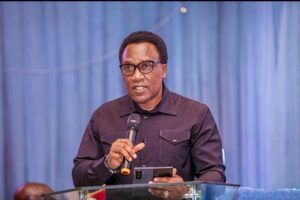
Commending NMetS for convening the gathering, Anosike said the theme reflects a critical shift from theory to action, where scientific advancements must translate into practical solutions that safeguard communities and drive sustainable development.
“Climate change is no longer a distant concern. It is a lived reality, expressed through rising temperatures, erratic rainfall, flooding, droughts, heatwaves, and increasing weather extremes that affect ecosystems, economies, and societies, especially in Africa,” he said.
He painted a clear picture of Nigeria’s climate landscape, citing intensifying heatwaves, unpredictable rainfall patterns, advancing desertification in the north, and worsening coastal erosion in the south.
According to him, these overlapping threats are stretching existing response systems and demand a more sophisticated, data-driven approach.
Anosike stressed that modern meteorology is undergoing a transformation powered by artificial intelligence, satellite observation, and high-performance computing, tools he described as indispensable for accurate and timely forecasting.
He noted that NiMet is already integrating AI-driven models with satellite data to deliver more precise, impact-based predictions that can guide decision-making across agriculture, aviation, disaster management, and public health.
“Traditional approaches are no longer sufficient for the complexity of today’s climate challenges,” he said, adding that the fusion of advanced technologies is redefining how weather and climate information is generated, analysed, and deployed.
To accelerate this transition, NiMet has entered into strategic collaborations with global and regional partners, including AIM for Scale, Ignitia, Tomorrow.io, the Korean Meteorological Authority, and the China Meteorological Administration.
These partnerships, he explained, are helping to embed cutting-edge AI capabilities into the agency’s operational systems.
A key highlight of this innovation drive is NiMet’s Digital Climate Advisory Service (DCAS), which delivers tailored, weather-informed guidance to farmers.
The platform is designed to boost climate-smart agriculture by enabling rural communities to make informed decisions on planting, harvesting, and risk management.
Beyond technology, Anosike underscored the importance of human capital and institutional collaboration.
He called on professional bodies, researchers, and educators to deepen their contributions to meteorological science, while urging the private sector and civil society to invest in observation infrastructure and climate services.
He also challenged the Nigerian Meteorological Society to play a leading role in mentoring the next generation of scientists, promoting ethical research standards, and bridging the long-standing gap between scientific knowledge and public policy.
Aligning with the United Nations’ Early Warnings for All initiative, the NiMet DG reaffirmed the agency’s commitment to leveraging innovation to build a climate-resilient nation.
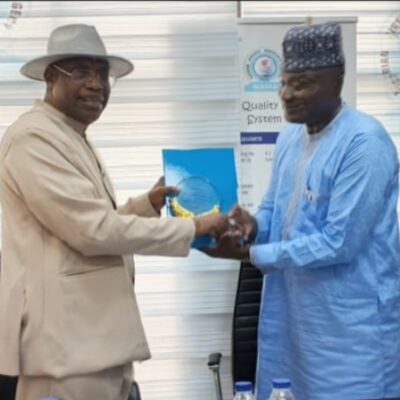
As a mark of recognition, Anosike was conferred with a fellowship and commendation award at the event, underscoring his contributions to advancing meteorological services in Nigeria.
With climate shocks becoming more frequent and severe, his message was that the future of weather forecasting and national resilience will be defined by how effectively science and technology are deployed today.

Olapeju is a journalist and aviation reporter.