

BY OLAPEJU OLUBI
The Nigerian Meteorological Agency (NiMet) has pledged to strengthen weather and climate information services for farmers as part of efforts to improve agricultural productivity, build resilience and enhance food security in Nigeria.
The Director-General and Chief Executive Officer of NiMet, Professor Charles Anosike, stated this in his goodwill message at the National Strategic Dialogue on the preparation of the AGROW Component 2.2 National Implementation Strategy and Digital Agriculture Architecture in Abuja.
The dialogue was organised by the Federal Ministry of Agriculture and Food Security under the World Bank-supported Nigeria Sustainable Agricultural Value Chain (AGROW) Project.
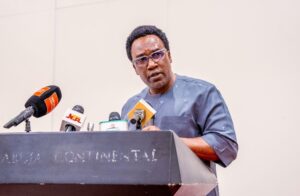
Held under the theme, “Building a Unified, Inclusive and Future-Ready Digital Agriculture Ecosystem for a More Productive, Resilient and Food-Secure Nigeria,” the meeting brought together stakeholders to discuss ways of strengthening Nigeria’s digital agriculture ecosystem.
Anosike said the initiative was important to NiMet because of the agency’s mandate to provide weather and climate information to support decision-making in climate-sensitive sectors, particularly agriculture.
He noted that changing rainfall patterns, climate variability and extreme weather events were increasingly affecting farming activities, making timely and reliable climate information essential for farmers.
According to him, NiMet provides Seasonal Climate Predictions, regular weather updates, agrometeorological services and impact-based advisories to help farmers make informed decisions on planting, water management and the application of agricultural inputs.
He said digital agriculture could help translate such climate information into practical advice that farmers could access and use at the farm level.
Anosike highlighted NiMet’s partnership with Tomorrow.io and MTN on the Digital Climate Advisory Services (DCAS) system, which is designed to provide location-specific weather advisories to farmers through mobile SMS.
He also cited the agency’s partnership with the Agricultural Innovation Mechanism for Scale (AIM for Scale) to strengthen the integration of artificial intelligence-based weather forecasting with digital agricultural advisory systems.
The NiMet boss stressed, however, that digital agricultural services must be delivered through channels that farmers can easily access and trust.
He called for stronger collaboration among extension workers, technology companies, telecommunications operators, community radio stations and farmer organisations to improve last-mile delivery of agricultural information.
Anosike also said digital services must reflect farmers’ realities, including language, literacy levels, connectivity, affordability and gender considerations.
He urged stakeholders to involve farmers in the design and development of climate services to ensure that the solutions provided address actual challenges confronting them.
The NiMet DG commended the Minister of Agriculture and Food Security, Senator Abubakar Kyari, for efforts to promote climate-smart agriculture.
He challenged stakeholders to develop a practical, inclusive and measurable roadmap for integrating weather and climate services into decision-making across the agricultural value chain.
Anosike expressed optimism that the dialogue would advance digitally enabled, climate-smart and farmer-centred agriculture, while reaffirming NiMet’s readiness to provide the technical expertise required to strengthen climate services, support food production and build more resilient livelihoods.

Olapeju is a journalist and aviation reporter.