

BY OLAPEJU
The Nigerian Meteorological Agency (NiMet) and the United Kingdom Met Office have begun moves to strengthen Nigeria’s ability to predict and respond to health risks linked to climate change.
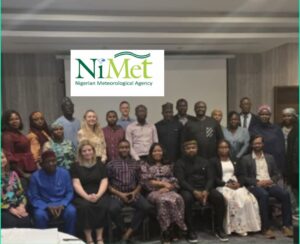
The two agencies are hosting a five-day Climate and Health Learning Lab in Abuja from November 23 to 27, 2026, under the Weather and Climate Information Services for Africa (WISER) programme.
The meeting brought together representatives of NiMet, the Federal Ministry of Health and Social Welfare, the UK Met Office, the Foreign, Commonwealth and Development Office (FCDO) and other government agencies.
Speaking at the opening on behalf of NiMet’s Director-General, Prof. Charles Anosike, the Director of Applied Meteorological Services, Mrs Glory Onyegbule, said climate change and changing weather patterns were increasingly threatening public health.
Anosike identified rising temperatures, heat stress, changing rainfall patterns, flooding and climate-sensitive diseases as some of the growing threats requiring urgent attention.
He called for stronger cooperation among agencies responsible for weather forecasting, healthcare, water resources and emergency management to improve the country’s response to climate-related health challenges.
The NiMet boss said the success of the learning programme should be measured by practical results, institutional commitments and recommendations that could be implemented.
He appreciated the UK Met Office for its technical support through the WISER programme and urged participants to work towards establishing a sustainable and functional Health Early Warning System (HEWS) for Nigeria.
The proposed system is expected to help relevant authorities identify climate-related health threats early and take preventive measures before they develop into emergencies.
Participants at the meeting examined ways to establish a permanent national health early warning system, including clearer responsibilities for government agencies, improved coordination and better use of existing data and information platforms.
They also discussed the need for evidence-based recommendations that would encourage sustained government support for the initiative.
Presentations at the meeting covered the responsibilities of NiMet, the National Emergency Management Agency (NEMA), National Orientation Agency (NOA), Nigeria Centre for Disease Control and Prevention (NCDC), Nigeria Hydrological Services Agency (NIHSA), National Bureau of Statistics (NBS), National Council on Climate Change (NCCC) and the Federal Ministry of Health and Social Welfare.
NiMet’s mandate was presented by its Deputy General Manager, Climate Services, Oyegade Adeleke.
A major highlight was the UK Met Office’s ACTION FIRST approach, which encourages authorities to move beyond simply asking what the weather will be like to considering what they can do to protect lives and property.
The approach has four stages: setup, preparation, warning and review.
Participants also shared experiences and sought clarification on issues relating to climate and health, disaster management and agriculture, with relevant agencies providing responses based on their responsibilities.
The meeting identified the need to incorporate indigenous knowledge into public risk education, address institutional and technical gaps, secure sustainable funding and strengthen partnerships among government agencies.
These measures are expected to support the development of a coordinated system that would enable Nigeria to prepare for and respond more effectively to health emergencies triggered or worsened by changing weather conditions.

Olapeju is a journalist and aviation reporter.