
BY OLAPEJU OLUBI
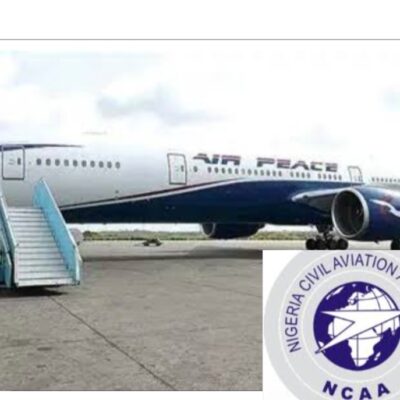
In a twin boost to Nigeria’s aviation industry, President Bola Ahmed Tinubu has approved a 30 per cent reduction on airlines’ outstanding statutory debts, just as the country clinched a historic 91.45 per cent safety rating from the International Civil Aviation Organization.
This was disclosed in a statement by the Spokesman of the Aviation Minister, Tunde Moshood.
The statement noted that the presidential directive, unveiled in Abuja, targets mounting financial pressures on domestic carriers battered by soaring Jet A1 fuel costs and a volatile operating environment.
The relief applies to accumulated obligations including parking charges owed to the Federal Airports Authority of Nigeria, navigational fees due to the Nigerian Airspace Management Agency, and other regulatory liabilities.

Authorities say the intervention is designed to stabilise airline operations, prevent service disruptions, and keep Nigeria’s domestic air network afloat at a time of escalating cost burdens.
Minister of Aviation and Aerospace Development, Festus Keyamo, disclosed that the approval was conveyed through the Chief of Staff to the President, Femi Gbajabiamila, signalling top-level urgency in addressing the sector’s challenges.
According to the minister, the move reflects a deliberate policy to protect a critical industry that underpins business travel, regional connectivity, and economic activity.
“The initiative underscores the administration’s commitment to stabilising the aviation industry, safeguarding airline operations, and ensuring the continued viability of domestic air transport services across the country,” Keyamo said.
The financial lifeline comes on the heels of a landmark achievement in safety oversight, with Nigeria recording its highest-ever Effective Implementation (EI) score of 91.45 per cent following a rigorous audit by ICAO at the headquarters of the Nigeria Civil Aviation Authority in Abuja.
The result, announced during an ICAO debriefing session, vaults Nigeria far above the West African regional average of 61.1 per cent and the global benchmark of 70.4 per cent—firmly positioning the country among top-tier aviation safety performers.
Industry stakeholders view the milestone as a turning point that could unlock new investment flows, deepen international airline partnerships, and enhance Nigeria’s credibility in global aviation circles.
Beyond optics, the rating signals stronger regulatory systems, improved compliance with international standards, and a more resilient safety oversight framework, key indicators for investors and global aviation partners.
ICAO, the United Nations’ specialised aviation body, sets and monitors global standards for air navigation and safety through its Universal Safety Oversight Audit Programme (USOAP).
The programme measures how effectively member states implement safety regulations across critical areas of aviation governance.
Nigeria’s latest score reflects years of incremental reforms, regulatory tightening, and institutional capacity building within its aviation ecosystem. Since joining the audit programme in 1999, the country has undergone four comprehensive reviews, with each cycle shaping improvements in its safety architecture.
With the dual impact of financial relief and international validation, analysts say Nigeria’s aviation sector may be entering a recovery phase, one where operational sustainability aligns with global best practices.

Olapeju is a journalist and aviation reporter.