
…Says 85% Caused By External Factors, 15% Internal
BY OLAPEJU OLUBI
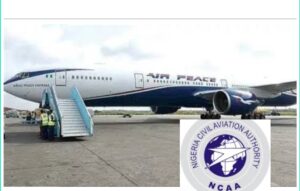
Air Peace has rejected the August 2026 flight disruption report published by the Nigeria Civil Aviation Authority (NCAA), accusing the regulatory agency of using inaccurate operational figures and failing to account for external factors responsible for the majority of its flight delays.
The airline, in a statement signed by its Chief Operating Officer, Oluwatoyin Olajide, said the NCAA report understated its total flight operations for the month and wrongly attributed delays to the airline.
Air Peace claimed that it operated 2,564 flights in August, compared with the 1,864 flights recorded in the NCAA report.
According to the airline, the exclusion of more than 700 flights from the NCAA’s calculations distorted its performance indicators and inflated the reported delay percentages.
It also questioned the decision to publish August’s data without a corresponding July report, particularly given the speed of the August release.
The airline said the NCAA report was published just 13 days after the end of August, despite the absence of equivalent monthly data for July.
Air Peace further argued that the report should have explained the unusual operational disruptions experienced across the aviation sector during the month, particularly the industrial action that began on August 11.
It said the union-related disruption affected its operations for more than 14 days, resulting in flight rescheduling, cancellations and additional delays.
External factors responsible for delays
Providing details of its internal review, Air Peace said only 391 flights, representing about 15 per cent of the delays recorded during August, were caused by internal operational factors.
It attributed the remaining delays to external challenges, including airport congestion, inadequate infrastructure, adverse weather conditions, bird strikes, industrial action and damage to aircraft by ground-handling companies.
The airline identified airport congestion and traffic as the largest contributor to its external delays, accounting for more than 51 per cent.
It explained that aircraft were frequently held on the ground or placed in holding patterns because of limitations in airport infrastructure and operational capacity.
Air Peace also cited bird strikes as a major disruption to its flight schedules, noting that one of its aircraft, 5N-BYG, was struck by a bird in Abuja.
According to the airline, the incident damaged the aircraft’s inlet cowl beyond acceptable limits and required repairs costing $1.8 million.
The aircraft, which typically operates at least eight sectors daily and carries approximately 1,000 passengers, was removed from service for more than a week until the damaged component was replaced.
Air Peace said the incident significantly affected its flight rotations and contributed to operational disruptions during the month.
It also blamed deficiencies and unexpected breakdowns in airport facilities for delays in boarding and departures.
Weather, industrial action compound disruptions
On weather-related disruptions, the airline said unfavourable conditions during the rainy season forced safety-related delays and flight diversions.
It noted that a single diversion could result in nearly three hours of additional delays, depending on the circumstances.
Air Peace said it continued to provide support to affected passengers, including hotel accommodation, even when disruptions resulted from circumstances beyond its control.
The airline also identified the August 11 picketing by aviation unions as a major disruption, saying its effects lasted for more than two weeks.
In addition, it cited damage to one of its aircraft by a ground-handling company, which it said resulted in the aircraft being withdrawn from active operations for more than 14 days.
Air Peace maintained that the combination of these factors made it inaccurate to portray the airline as primarily responsible for the delays recorded during the month.
Calls for NCAA data review
The airline said it had previously refrained from publicly challenging the report but decided to respond after what it described as an unacceptable portrayal of its operational performance.
It reaffirmed its commitment to safety, punctuality and passenger satisfaction, noting that it had invested in fleet expansion, crew availability, training and aircraft maintenance.
However, it said airlines could not independently eliminate delays caused by airport congestion, infrastructure limitations, adverse weather and other external operational restrictions.
Air Peace said it would continue improving its internal processes to reduce delays within its control.
It urged the NCAA to review and audit its data collection methods to ensure that future reports accurately capture airlines’ operational volumes, delay causes and the broader operating environment in Nigeria’s aviation sector.

Olapeju is a journalist and aviation reporter.