

…Faults NCAA’s 60% August Disruption Figure As MM2 Seeks Staggered Flight Slots
BY OLAPEJU OLUBI
Nigerian airlines have blamed airport congestion, poor infrastructure, bad weather and technical problems for a large share of flight delays and cancellations in the country.
They said many of the factors responsible for delayed flights were outside the control of airlines, urging regulators and other players in the aviation industry to share responsibility for addressing the problem.
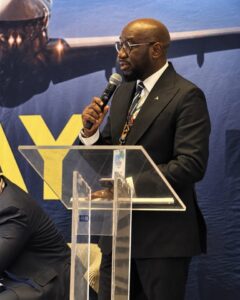
The Chief Commercial Officer of United Nigeria Airlines (UNA), Adedayo Olawuyi, made the submission at the Aviation Day of the 23rd Akwaaba African Travel Market in Lagos.
The session, held on Tuesday, was themed, “Delayed and Cancelled Flights: The Rules and the Rights of Passengers – The Airline Perspective.”
Olawuyi said congestion at airports could delay an aircraft even when an airline was ready to operate its flight on schedule.
He compared the situation to living in a house with several cars but only one parking space, making it difficult for vehicles to move freely.
According to him, several aircraft may be scheduled to leave around the same time, resulting in congestion on the airport ramp and delaying departures.
He said an aircraft scheduled to leave at 6:59 a.m. could end up taking off at 7:38 a.m. simply because it was unable to move through the congested airport.
“That aircraft was supposed to arrive in Abuja by 8 a.m., but there is already a 40-minute delay that the airline knows nothing about,” he said.
Olawuyi, however, admitted that airlines were responsible for delays caused by factors within their control.
He said technical problems could also affect flight schedules because airlines must ensure that aircraft are properly checked and repaired before they are allowed to fly.
He also cited bad weather as another major cause of disruptions.
Giving an example, he said a UNA flight from Lagos to Kano recently departed at about 10:30 p.m. after bad weather initially prevented its departure.
Although the aircraft eventually reached Kano, a thunderstorm affected the runway lighting system shortly before landing, forcing the aircraft to return to Lagos.
The aircraft eventually landed in Lagos at about 1 a.m., he said.
Olawuyi said such an incident could not reasonably be blamed on the airline.
He added that many airports in Nigeria still had limited operating hours because they lacked adequate lighting and other facilities required for night operations.
According to him, when delays caused by other factors stretch into the night, airlines may have no option but to cancel flights to airports that cannot safely receive aircraft after dark.
Olawuyi also questioned the way the Nigerian Civil Aviation Authority (NCAA) presented its August 2026 flight disruption figures, which showed that more than 60 per cent of domestic flights were delayed.
He argued that the figures should separate delays caused by airlines from those caused by other factors.
He said blaming airlines for the entire figure would give passengers a misleading picture of the problem.
“If you remove the controllable delays and you still have a high number of 60 per cent, then you can say the problem is the airlines,” he said.
Olawuyi called for the performance of all stakeholders, including airlines, airports and regulators, to be considered when assessing the causes of flight disruptions.
The Chief Commercial Officer of ValueJet, Trevor Henry, also identified several factors that could cause delays.
He mentioned presidential movements, bad weather, congestion at check-in points, security checks, crowded boarding lounges and congestion at boarding gates.
He added that aircraft could face further delays after leaving the boarding area because several planes might be waiting to use the taxiway and runway, particularly during the busy morning period.
The Chief Operating Officer of Murtala Muhammed Airport Terminal 2 (MM2), Remi Jibodu, proposed a coordinated flight scheduling system to reduce congestion.
He said it was common for several airlines to schedule flights for around 7 a.m., resulting in thousands of passengers arriving at the airport at about the same time.
According to him, there are situations where more than 10 airlines have 7 a.m. departures, making delays almost unavoidable.
Jibodu suggested that airlines and airport operators should work together to stagger departure times.
“What we can do at that point in time is to have a coordinated system, which means that we have to collaborate with the airlines to say instead of having everybody going out at 7 o’clock, can we stagger it a little bit?” he said.
He said Nigeria might not need a full slot system immediately but could introduce some form of coordinated scheduling to spread flights and passenger traffic across the morning.
Olawuyi also urged passengers to understand their rights when flights are delayed or cancelled.
He said passengers were entitled to refreshments when delays reached two hours and a full meal when delays extended to four hours, while compensation could apply after longer delays, subject to the applicable passenger-rights rules and the cause of the disruption.
He also advised passengers to arrive at the airport on time, check flight updates and make use of online check-in where available.
According to him, passengers should remain calm when disruptions occur because airlines also have a duty to keep them informed and assist them.
He said airlines could be required to provide accommodation and transportation in certain cancellation situations, particularly where the airline was responsible for the disruption and the applicable passenger-rights rules were triggered.
Olawuyi said that even when a cancellation was caused by factors outside an airline’s control, airlines could still assist passengers by offering alternative flights or, where appropriate, allowing Lagos-based passengers whose Lagos departure was cancelled to return home and take another flight later.
The panelists agreed that reducing flight disruptions would require joint action by airlines, airports, regulators and other aviation stakeholders rather than placing the entire blame on airlines.

Olapeju is a journalist and aviation reporter.