


BY OLAPEJU OLUBI
United Nigeria Airlines has temporarily withdrawn one of its CRJ-900 aircraft from service following a bird strike incident during landing in Abuja.
This has triggered operational disruptions across parts of its network and renewing focus on aviation safety risks in Nigeria.
In a statement issued Tuesday, the airline confirmed that the incident involved Flight UN0579, which departed Mallam Aminu Kano International Airport in Kano and was scheduled to land at Nnamdi Azikiwe International Airport, Abuja, at 18:15 hours on April 14, 2026.
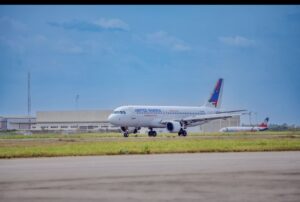
The airline said the aircraft encountered a bird strike on approach but landed safely, with no immediate indication of passenger injury. However, in line with aviation safety protocols, the aircraft has been grounded pending a full technical inspection.
“Consistent with our strict and uncompromising safety standards, the aircraft has been immediately withdrawn from operations to undergo comprehensive technical checks and any required maintenance before returning to service,” the airline said.
The development is expected to disrupt scheduled services, as the affected aircraft forms part of United Nigeria Airlines’ active fleet serving key domestic routes. The carrier warned that some flights may not operate as planned in the short term, urging passengers to expect possible delays or cancellations.
While apologising for the inconvenience, the airline underscored that safety considerations would not be compromised under any circumstances.
“Safety remains our highest priority. We sincerely apologise for any disruption this unforeseen incident may cause to our passengers’ travel plans,” the statement added.
The latest occurrence marks the fifth bird strike involving the airline’s operations since January 2026, highlighting a persistent challenge within Nigeria’s aviation ecosystem, particularly during landing and takeoff phases when aircraft are most vulnerable.
Bird strikes, collisions between aircraft and birds, are a known hazard in global aviation, often requiring immediate inspection of engines, fuselage, and critical systems to rule out damage. In severe cases, such incidents can lead to costly repairs, extended aircraft downtime, and broader operational ripple effects.
Industry analysts note that the frequency of such incidents in Nigeria raises questions about wildlife hazard management around airports, including habitat control, waste management, and deployment of bird deterrent systems.
Despite the recurrence, United Nigeria Airlines maintained that all incidents have been handled in full compliance with regulatory requirements and established operational procedures.
“We appreciate the understanding of our valued passengers and reaffirm our commitment to maintaining the highest standards of safety and operational reliability,” the airline said.
The carrier added that it would continue to implement measures aimed at strengthening operational resilience and minimizing disruptions, even as it navigates the immediate impact of the grounded aircraft.
The incident comes at a time when Nigerian airlines are already grappling with fleet constraints, rising maintenance costs, and tight scheduling margins, leaving little room for unexpected technical withdrawals.
For passengers, the airline advised close monitoring of flight updates and engagement with its customer service channels for rebooking or further assistance.
As investigations and inspections continue, the spotlight is likely to remain on airport environmental management and the broader need to mitigate bird strike risks across Nigeria’s aviation sector.

Olapeju is a journalist and aviation reporter.