

BY OLAPEJU OLUBI
The Nigerian Meteorological Agency (NiMet) has strengthened its internal governance structure with the formal induction of a newly expanded Anti-Corruption and Transparency Unit (ACTU), signaling a deeper institutional push to embed accountability, ethical compliance, and transparent operations across all levels of the agency.
The move forms part of a wider reform push aligned with NiMet’s 2026–2030 Strategic Plan, which is anchored on the core values of Integrity, Professionalism, Accountability, Commitment, and Excellence (I-PACE).
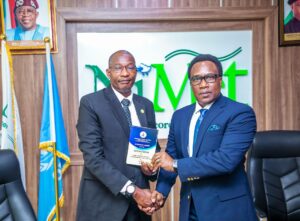
Speaking at the ceremony, the Director General and Chief Executive Officer of NiMet, Prof. Charles Anosike, described the development as a decisive step in strengthening internal safeguards against corruption and improving service delivery across the agency.
He said the ACTU remains central to preventing unethical practices and embedding a culture of accountability within the organisation, adding that its membership has been expanded from five to eight to enhance effectiveness and inclusiveness.
“The fight against corruption is a collective responsibility,” he said, urging staff across all levels to embrace ethical conduct as a core operational standard rather than a compliance requirement.
Prof. Anosike also reaffirmed management’s commitment to fully supporting the unit, stressing that institutional credibility depends on sustained vigilance, transparency, and adherence to due process.
He further charged the newly inducted members to demonstrate discipline and professionalism in carrying out their responsibilities, noting that their role is critical to safeguarding public trust in the agency.
The Independent Corrupt Practices and Other Related Offences Commission (ICPC) also commended NiMet’s leadership for deepening its anti-corruption architecture through the formal activation of the ACTU.
The ICPC Chairman, Dr. Musa Adamu Aliyu, SAN, who was represented by Mr. Olusegun Adigun, praised the initiative and encouraged stronger institutional collaboration between both organisations to reinforce accountability systems and improve governance outcomes.
He noted that sustained cooperation between regulatory and public sector institutions remains essential to building credibility, strengthening compliance, and reducing vulnerabilities to corruption.
The ceremony concluded with a renewed commitment by NiMet’s leadership to uphold transparency-driven reforms, with Prof. Anosike reiterating that the agency will continue to prioritise integrity and institutional excellence as key pillars of national development.

Olapeju is a journalist and aviation reporter.