
BY OLAPEJU OLUBI
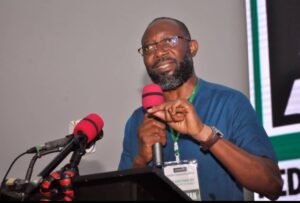
Executive Director, Operations and Technical, Tantita Security Services Nigeria Limited, Warredi Enisuoh, has advised the Federal Government to introduce security education in schools and deploy advanced surveillance technology to tackle kidnapping, oil theft and other threats to the movement of people and goods.
He also called for the use of facial recognition cameras and thermal drones to strengthen security at seaports, highways and other critical transport infrastructure.
Enisuoh spoke on Friday at the second Nigeria Transport Summit, held at the Providence Hotel, GRA, Ikeja, Lagos.
The summit was organised around the theme, ‘Navigating Global Disruptions and the Road Ahead: Mobility, Energy and Trade Facilitation for a Resilient Future.’
He said many security threats thrive because people are unaware of the dangers around them, stressing that security consciousness should be taught from the basic school level.
“The amount of insecurity that has somehow inflicted this country is not reflected in the day-to-day education of our children in school. We should start teaching insecurity in school now,” he said.
According to him, Nigerians must stop assuming that kidnapping and other security threats cannot affect them.
“Because those who will be kidnapped tomorrow are free today. Everybody seems to feel it’s not their business or ‘not my portion,’ but the person who was taken yesterday felt the same way,” he added.
Enisuoh said Nigeria’s transport infrastructure, particularly its seaports and highways, needed to be redesigned to address modern security challenges.
He noted that the aviation industry had made progress in security through international audits, perimeter fencing and strict access controls, adding that the maritime sector could adopt similar measures.
He advocated automated port operations supported by artificial intelligence, facial recognition and digital tracking systems to reduce human involvement and limit security gaps.
Enisuoh disclosed that his team was developing a security network for Delta State using facial recognition cameras that could track individuals across different locations.
He also called for deeper seaports capable of accommodating larger vessels, arguing that monitoring a smaller number of large ships would be easier than securing hundreds of smaller vessels operating in shallow waters.
On road security, he said drones fitted with thermal sensors could help security agencies detect people hiding in bushes along vulnerable routes, including the East-West Road.
“If every state patrols its section using drones, we secure both human lives and the movement of commercial goods,” he said.
The Tantita executive also disclosed that the company, working with national security forces, had intercepted two foreign vessels suspected of attempting to steal crude oil within the 48 hours preceding the summit.
He said the company had deployed long-range surveillance drones for continuous maritime patrols from Warri towards the Ghanaian border in response to growing threats to Nigeria’s waters.
Enisuoh urged the Federal Government to strengthen the protection of marine resources, including fisheries, and accelerate the development of solid minerals to reduce the country’s dependence on crude oil.
Meanwhile, the Convener of the summit, Pearl Ngwama, warned that global conflicts, unstable oil prices and disruptions to international shipping were increasing transport costs and putting pressure on Nigerian businesses and households.
She said rising energy prices were increasing airlines’ fuel bills, shipping costs and road transport expenses, with the additional burden eventually passed on to passengers and consumers.
Ngwama cited reports indicating that crude oil prices rose to $131 per barrel in mid-September 2026 following attacks on international energy infrastructure.
She also pointed to disruptions in Red Sea shipping and higher costs of hiring oil tankers.
She said Nigeria could not control international conflicts or global oil prices but could reduce their effects by improving domestic transport infrastructure and making the movement of goods more efficient.
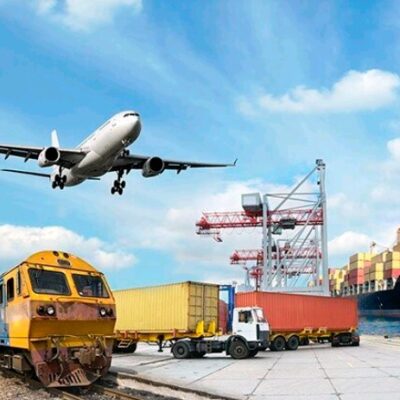
According to her, poor connections between seaports, railways, roads and inland waterways continue to limit the benefits Nigeria could derive from its transport network.
She stressed that better coordination among the different transport systems would help Nigerian businesses compete more effectively in the African Continental Free Trade Area, which provides access to a continental market of about 1.3 billion people.
Ngwama also called for reliable energy supply, digital cargo tracking and stable government policies, warning that frequent policy changes and overlapping responsibilities among regulators could discourage private investment.
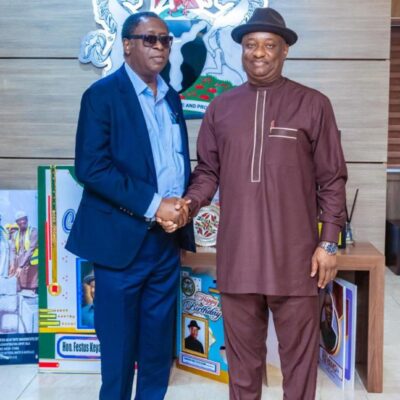
The summit featured the Minister of Aviation and Aerospace Development, Festus Keyamo; Minister of Marine and Blue Economy, Adegboyega Oyetola; and former Managing Director of the Federal Airports Authority of Nigeria, Richard Aisuebeogun, among other industry stakeholders.
Bi-Courtney Aviation Services Limited, operator of Murtala Muhammed Airport Terminal Two, was also recognised for its role in private-sector airport development and concessioning.
Ngwama urged stakeholders to turn discussions at the summit into practical measures that would help Nigeria prepare for global disruptions, limit their effects and keep economic activities running.

Olapeju is a journalist and aviation reporter.