
BY OLAPEJU OLUBI
To solve Nigeria’s transportation nightmare, a transport expert, Dr Femi Ola Aiyegbajeje, has urged the Federal Government to link railways, seaports, roads and inland terminals to reduce the cost of moving goods across Nigeria.
He said a coordinated transport system would improve cargo delivery, ease port congestion and help businesses move goods from production centres to markets more efficiently.
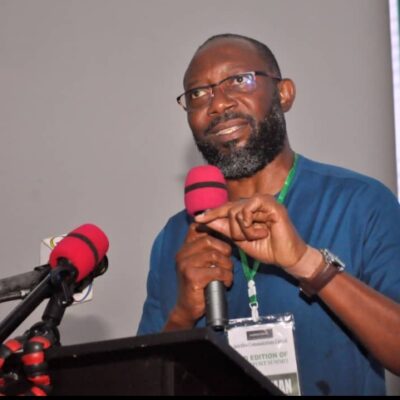
Aiyegbajeje, of the Department of Geography and Planning, University of Lagos, made the call in a presentation titled “Rail-Led Multimodal Integration: Unlocking Efficient Transport, Trade Facilitation and National Connectivity.”
He said railway projects would deliver greater economic benefits if integrated with other transport systems rather than operated as standalone infrastructure.
“Rail creates national value when it works as part of an end-to-end logistics chain—not as an isolated asset,” he said.
Under his proposed model, railways would handle suitable high-volume cargo over medium and long distances, while roads would provide collection and final delivery services.
Seaports according to him would support international trade, while air transport would handle urgent and high-value goods.
He stressed that the goal was not to replace other transport modes with rail but to combine them to reduce the total cost of moving goods from origin to destination.
Aiyegbajeje identified poor coordination among transport agencies, inadequate terminal facilities, unreliable services and fragmented cargo information as obstacles to efficient freight movement.
He called for better connections between railway terminals and seaports, coordinated train schedules, digital cargo tracking and simpler documentation procedures involving customs authorities and transport operators.
He also urged the government to establish clear service standards covering charges, delivery times, cargo handling and responsibility for losses or delays.
As a practical step, he proposed assessing the Apapa–Moniya/Ibadan freight corridor as a pilot project to test how port operations, rail services, inland terminals and road delivery could work together.
He said the project should be based on evidence of cargo demand, transport costs, available facilities and commitments from businesses willing to move goods by rail.
The expert recommended starting with cargo-flow studies and selecting commercially viable routes before expanding the model to other parts of the country.
He also warned that building railway lines without providing adequate maintenance, locomotives, wagons and dependable services could undermine the investment.
“Fund lifecycle maintenance and operating capacity—not only construction,” he said.
To measure progress, Aiyegbajeje proposed tracking delivery costs, transit times, port delays, cancellations, cargo damage and the reliability of train services. He said savings should be independently verified against the cost of moving the same goods by road.
He noted that Nigeria’s railway network had historically supported the movement of agricultural produce, minerals and other goods but had lost ground because of ageing infrastructure, poor maintenance and competition from road transport.
According to him, modern railway projects, including the Abuja–Kaduna, Lagos–Ibadan and Itakpe–Warri lines, offer opportunities to improve freight movement if supported by effective logistics services.
He said Nigeria’s transport policy should focus not only on building infrastructure but also on ensuring that goods move reliably and affordably between ports, factories, farms and markets.
“Build the service, not just the railway,” he said.

Olapeju is a journalist and aviation reporter.