

BY OLAPEJU OLUBI
The Nigerian Meteorological Agency (NiMet), in partnership with leading international and local agricultural organisations, has concluded a 10-day intensive training programme aimed at equipping agricultural extension professionals with the skills to help Nigerian farmers better manage climate-related risks and improve food production.
The Climate Risk Management in Agricultural Extension (CRMAE) Training of Trainers workshop, held in Abuja, was organised by NiMet in collaboration with the International Livestock Research Institute (ILRI), the Alliance for a Green Revolution in Africa (AGRA), the Stockholm Environment Institute (SEI), the Sasakawa Africa Association and other partners.
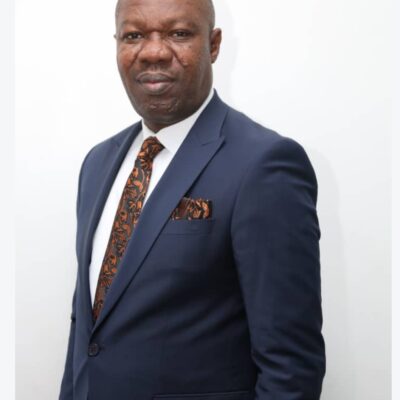
Speaking at the closing ceremony, the Director-General and Chief Executive Officer of NiMet, Prof. Charles Anosike, described agricultural extension officers as the vital link between climate information providers and farmers.
He said the officers play a crucial role in translating weather forecasts and climate data into practical farming advice, including the best planting periods, suitable crop varieties and efficient water management practices.
According to him, the training demonstrates the commitment of NiMet and its partners to ensuring that weather and climate information is not only available but also easily understood and effectively used by farmers to boost productivity and withstand the growing impact of climate change.
Professor Anosike explained that the Nigeria-adapted Climate Risk Management in Agricultural Extension curriculum would strengthen the capacity of extension personnel to provide climate-informed advisory services to farmers across the country.
He noted that studies have shown that effective and locally tailored agricultural extension services can increase farm productivity by between 20 and 30 per cent while significantly reducing farmers’ vulnerability to droughts, floods and other climate-related shocks.
The NiMet boss urged participants to share the knowledge acquired during the workshop with other extension workers, farmer groups, cooperatives and rural communities, stressing that the true value of the programme would be measured by its impact on farmers’ livelihoods, climate resilience and national food security.
He also reaffirmed NiMet’s commitment to institutionalising the Climate Risk Management in Agricultural Extension curriculum and promoting its widespread adoption as part of the agency’s broader efforts to strengthen climate services for agriculture and support Nigeria’s food security agenda.
Representing the AGRA Country Director, Dr. Esther Ibrahim, Programme Officer at AGRA Nigeria, described climate risk management as an indispensable component of modern agricultural extension services.
She encouraged participants to put the knowledge gained during the training into practice by providing farmers with timely, reliable and actionable climate information that will enable them to make informed farming decisions and build more resilient agricultural systems.
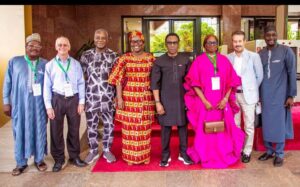
Other dignitaries at the ceremony included ILRI Representative Mr. Pierre Sibiry, climate expert Dr. Jim Hansen, Country Director of the Sasakawa Africa Association Dr. Godwin Atser, and Dr. Victoria Pillah of the National Universities Commission (NUC).
The workshop ended with the presentation of certificates to participants, who are expected to train more extension officers nationwide, helping to bridge the gap between climate science and farm-level decision-making while strengthening farmers’ ability to cope with the effects of climate change.

Olapeju is a journalist and aviation reporter.